Theme of the month
By Kelvin Chan

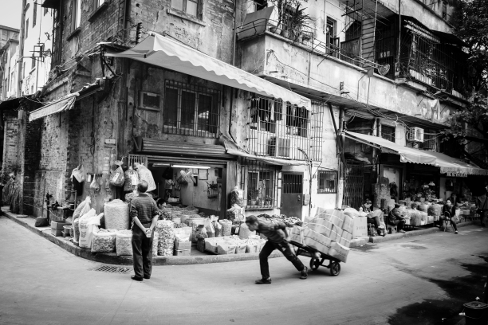
Street photography is photography that features the human condition within public places. Street photography does not necessitate the presence of a street or even the urban environment. Though people usually feature directly, street photography might be absent of people and can be an object or environment where the image projects a decidedly human character in facsimile or aesthetic.
Framing and timing can be key aspects of the craft with the aim of some street photography being to create images at a decisive or poignant moment. Street photography can focus on emotions displayed, thereby also recording people’s history from an emotional point of view. Similarly, Social documentary photographers document people and their behavior in public places for the purpose of recording people’s history and other purposes; photojournalists work in public places, capturing newsworthy events, which may include people and property visible from public places; services like Google Street View also record the public place at a massive scale.(Source: Wikipedia)

To the lesser mortals Street photography can be a daunting experience; shooting strangers (with a camera) right in their face is not an easy thing to do. At least I find it a challenge and in some places you’ll mostly likely get a verbal tirade or worst in hostile situation. Most people do not like that especially when their activities is in question they certainly don’t feel happy when an unknown photographer aim the camera at their direction few feet away. Having a huge camera or long zoom lens is a no-no where street photography is concerned. A small body with fixed lens works best. Stranger will feel intimidated and you’ll be noticed. As street photography is almost spontaneous, timing and composition are critical and you are not supposed to interact with your subject. There is virtually no time to check exposure and fumble with aperture. Pre setting up your camera and lens is crucial as you see life unfold before you. And then you choose the moment to press your shutter.

This article was published in Advanced Images Issue 78.