The Beauty of Simplicity

20/01/2020 | editor editor

by Szetoo Weiwen


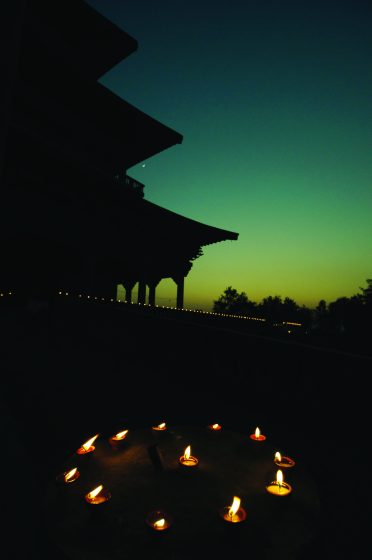
The composition of this image did not occur by accident or luck. The ring of oil lamps were placed strategically at the bottom half of the image to draw attention from the rooftop of the temple down to the oil lamps. Colour also plays a major role in this image as the use of colour is quite obvious. Most of this image is in silhouette, there are not many details that are visible to the eye. The human eye will always be attracted by the brightest part of the image which in this case is are the ring of oil lamps and then slowly move towards the gorgeously inky blue sky before noticing the outline of the temple. Colour on its own does not tell the whole story but works with contrast for full impact. This shot was taken right after the sun had set. What was previously an orangey purple skyline quickly turned greenish blue within half an hour. I was also lucky to have the local temple monks light up the oil lamps. Patience always pays off!

The saying less is more often holds true when it comes to photography. A busy photograph with too subjects often drowns out the message the photographer is trying to express as there are just too many elements for the viewer to focus on. Many of my favourite images are often those that exude simplicity and are rarely complicated because they are easy on the eye. Instead of trying to search for the key subject like in puzzle of Where’s Waldo?, the viewer’s attention is focused strongly on one component of the image which stands out. Images like these are effective in communicating an emotion to the viewer because


This method is often used in commercial or product photography where the image is often uncluttered and the subject is well lit because the advertiser wants you to pay attention to his product and message. Whenever you’re shooting in an uncontrolled environment (out of studio that is), very often you are faced with plenty external factors that are unavoidable. It is up to you as a photographer to subtract out all unnecessary detail and be extreme if you need to. You choose what the viewer sees. Try different angles, wait for people to walk out of your frame, never make excuses if you can avoid them with a little effort. Use the same composition tips that you’ve learned previously to your advantage such as centre of focus, colour, contrast, lines and curves.


I would hate to write a long and complex article about the topic of simplicity. Thus, this article is short and straightforward. Simplicity is a very powerful concept. Simple images strongly focus the viewer’s attention on the centre of focus by eliminating all distracting detail. This strengthens the images’ ability to communicate the emotion contained in the centre of focus. In photography, it is often the case that less-is-more.


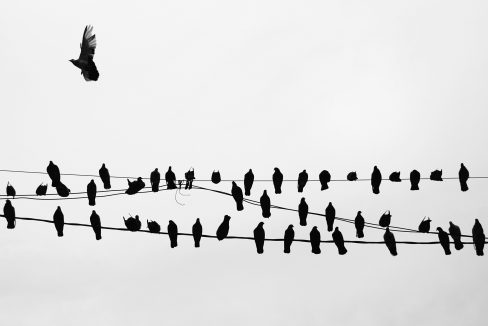
Simplicity can also be articulated through the lack of colour. Black and white images are less visually enticing but they can end up being more powerful because the viewer focuses on the subjects rather than the fancy colours. These last two images have a single point of focus and use lines to draw attention to the key subject.


This image is as simple as you can get. One main subject against a plain background. Use rule of third to compose your shot. Blank space can serve to provide focus to your subject as long as it does not clash with the colours of your main subject.


This article was published in Advanced Images Issue 56.

56