Text/Photos: Kelvin Chan
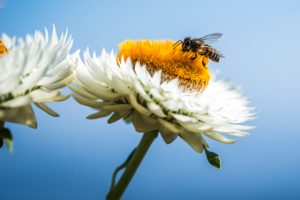
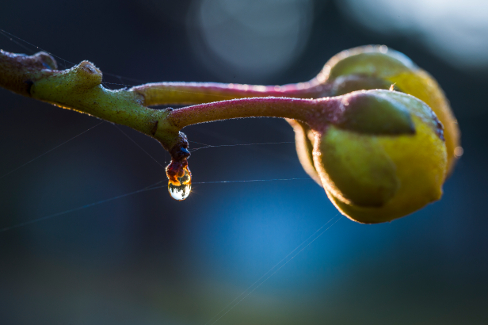
Macro photography is a genre of photography that you’ll either love it or will give up totally after an initial try. This is photography that requires a huge dose of patience and probably a strong pair of legs. I remember I was really amazed with photos of insects with extreme close-up revealing details that I’ve never seen before and wonder how it’s possible to capture those minute details and colours that are not visible to our naked eyes. Of course shooting extreme close-up of insect is not everyone cup of tea but there are more to this as I have friends who have shot beautiful macro shots that defies your imaginations.
Macro photography is basically extreme close-up photography of usually very small subjects that will appear much greater than life size in the photograph. To be able to capture this larger than live size images you will first need a specialize lens. The macro lens will enable you to get very close to the subject and will be able to capture and reproduce the subject of at least 1:1 ratio but will rarely be able to exceed the 1:1 ratio. In order to achieve a higher ratio of 1:1 you’ll need more specific equipment that is considered photomicrography.
Equipment
Macro photography requires very specific equipment. For a basic start up you will need at least a macro lens. Macro lenses can come in different focal lengths ranging from 40mm to 200mm but lenses with continuously variable focal length will be suitable for most macro subjects. The longer lens will be good for small animal and insects where you cannot get too close to them. It is also easier to place a small flash if there is a distance between the lens and subject.

Apart from the macro lens you can increase the magnification of the subject by adding close-up filter, extension tubes and bellows. Macro photography can also be done by mounting a lens in reverse using a macro coupler to screw the lens to camera body.
Depth of field
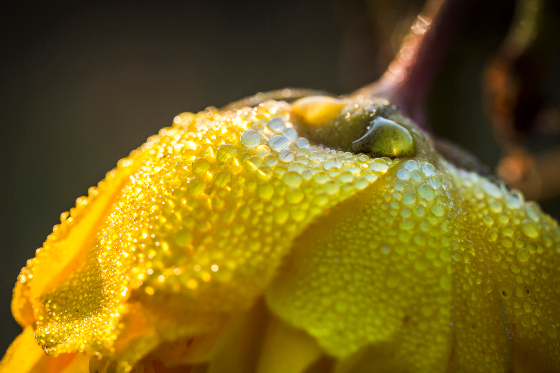
Limited or shallow depth-of-field plays an important part of macro photography. Depth of field is extremely shallow when focusing on a subject up-close. In order to get acceptable sharpness with enough details you’ll need to use a small aperture (bigger f-number). With a bigger f-number you will need enough light on your subject so that the shutter speed will not be too slow. Your subject can move (esp. insect) or even a slight wind will cause your flower to sway resulting a blur image.

To avoid too slow a shutter speed you’ll need to add in auxiliary lighting, like a small flash unit (preferable a ring flash), as a bigger flash unit will not able to reach your subject if they are hiding under the leaves or flowers. And most importantly, you will need a steady tripod as you will need to do manual focus when your lens is very close to your subject it may not be able to auto focus.
Not sure if macro photography is for you? No worry, just get down to your knees and let your imagination run wild. As for me I am happy with the occasional macro shots from my garden and using my macro lens for fine dining food shots.
This article was published in Advanced Images Issue 80.