Interview by Jessica Chan
Photos by Gary L. Friedman (US)
First of all, where do you call home?
Southern California. We’re about a 20-minute drive from Disneyland. J
What fired your passion in photography?
Good question… and I don’t have a good answer for you. I can tell you that my parents signed me up for a Scientific Discovery of the Month club when I was very young. That got me started in electronics, science, and gave me a good foundation for my engineering degree. It also gave me plans for making a basic B&W darkroom – I had an enlarger, safelight, and chemical trays. I used my father’s Ricoh 35mm rangefinder and developed and enlarged pictures in our main bathroom. I’ve been shooting ever since!
 You have been a designer, inventor and innovator. Is your creativity in photography in anyway influenced by these roles?
Actually people don’t usually associate engineering with creativity, which is unfortunate because creativity is always a key ingredient in problem solving. And so I don’t see photography as being any more creative than any of my other work.
And interestingly, there are many examples where the opposite was true – photography influenced my engineering achievements! When I was in my 20’s I hooked up my camera to my calculator so I could take time exposures at night. I never knew how long to keep the shutter open for, so I programmed the calculator to try different exposure times. Later I used the same calculator to completely automate my darkroom – it became a negative analyser, filter computer, exposure timer, and print timer. It left me free to concentrate on the creative aspects instead of worrying about the “dog work”. Finally I designed a slide projector dissolve unit from scratch which met my own needs. (All of these were described in detail in my first book, “Control the World with HP-IL” which is now in the public domain: http://friedmanarchives.com/Writings/Control_the_world_with_HP-IL.pdf
I heard you worked for NASA. Tell us something about that.
It was the best job any engineer could ask for. I worked for the part of NASA that sent robots to the outer planets and sent back all sorts of new knowledge. I worked on the Voyager spacecraft (which gave the world its very first glimpse of Jupiter, Saturn, Uranus, and Neptune. I also worked on the Galileo spacecraft which explored Jupiter in far greater detail. I finally left after 10 years so I could try and commercialize some of my patents.
Amongst the many genres that you have done, do you have a special interest in any particular genre/s?
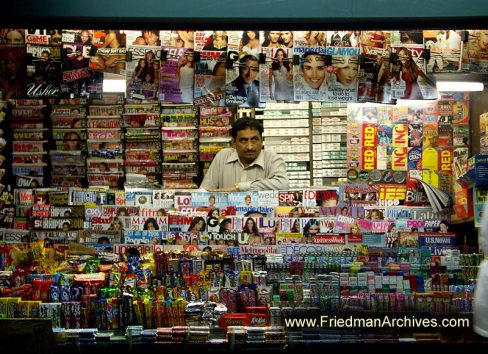
That’s a hard question to answer, but I think it’s safe to say that travel photography is amongst my very favourites. It gives me an excuse to go places and meet people that I never would have a chance to meet otherwise. It often gives me a different perspective and broadens my mind. And it also allows me to tell a story and share it with others, probably one of the most valuable functions of photography.
 You are very generous in sharing your knowledge through writing books, conducting seminars, etc. What is the satisfaction that you derived through sharing your knowledge?
I feel I’ve always been a teacher. I’ve always enjoyed seeing the “Aha!”moment when someone suddenly understands an idea which was ungraspable just a few minutes earlier. It’s just a lot of fun. I’ve had students in Calculus say to me “What’s so hard about Calculus?” You know you’ve done a good job when you hear that. In photography it’s the same thing – beginners get so intimidated with the learning curve, and it really doesn’t have to be that way. The basic principles of light and composition are straightforward and easy to understand. But for some reason nobody talks about the basics like this anymore.
You have traveled far and wide. What did you learn from your travels?
I’ve learned never to be judgemental of other people or other cultures. I’ve learned to have an open mind when it comes to different points of view, food, or interacting with others. When you take this approach you often learn much about yourself, your own biases and beliefs, and unchallenged assumptions about human nature. I’ve learned that I’m responsible for my own moods and my own happiness. Nobody else can influence these important things.
I think my travels have also helped me understand how backwards the U.S. is from the rest of the world. We live in cities where people don’t know their neighbours. We have the best food available yet our eating habits are awful. We consume natural resources, pollute the earth, and live off the backs of other countries. We try to impose our values on other cultures, either through Hollywood movies or military invasions. We should be very happy but we’re not.
What are your favourite equipment and gadgets?
That’s a hard question. It used to be my Hewlett Packard 41C calculator (which I explained earlier.) Lately it’s been my smart phone – not only can I take pictures with it, but I can also predict where the sun will rise and set (at different times of year, too!), translate spoken language when I travel, and give me turn-by-turn navigation and let me run my business from anywhere in the world. And it all fits into my pocket! Now compare that to the Shoe Phone I built while I was in college http://tinyurl.com/6vbe8zo and it’s clear what a miracle of engineering these things are. (I know you meant “Photography related gadgets”, but other than wireless flash I don’t really use any.)
Your award winning documentary on “Peace Child in Latvia” is quite a touching moment. Please tell us something behind the scene.
Thank you for the kind words! This trip really placed me and my family members’ careers in danger. At the time the U.S. and the Soviet Union were enemies, and even had nuclear missiles pointed at each other. Plus my father and my brother worked in the defence industry, and at the time I was still at NASA. For all of those companies, you could lose your career if managers saw that your brother / son visited the enemy.
Back in 1988 there was a grass-roots organization called “Peace Child” which was able to orchestrate foreign exchange tours between Soviet and American high school students. At the time this was quite daring and unpopular, but their philosophy was to let these kids see the “enemy” first hand, and let them write and perform a play which dealt with the historic tensions between the two countries. The more the kids worked together the closer their friendships became, until they were all but inseparable by the end of the tour. The hope was that one day these kids will grow up and be active politically, and they won’t want to wage war on their friends.
I loved the idea so much that I volunteered to pay my own expenses and join one of the 10 such cultural exchanges that occurred that year, capturing this very important story and bringing it home for Americans to see. It was very moving – in fact it left rooms full of grown adults crying. It was a technical challenge for me as well because I shot transparencies (where the exposure HAD to be right. Unlike today’s digital cameras, back then you were shooting blind and had no feedback.) And to tell the story properly I had to design and build (and program) my own Slide Projector Dissolve Unit from scratch.
I think the story withstands the test of time, and is just as relevant today as it was over 20 years ago. (A link to the documentary appears here: http://friedmanarchives.com/Latvia/PCLatvia.htm )
What do you think you will be doing with photography in 20 years time?
Well, I think I’ll still be writing books explaining how to use that 24 Gigapixel digital camera you just bought. J
I also would someday like to host a TV show (or maybe a YouTube or a Hulu show) where me and another photographer go around the world taking professional-quality images with the worst point-and-shoot and disposable cameras we can find. The whole goal of the show would be to emphasize that it is light and composition, rather than an expensive camera, that make for a good photograph. And each episode will prove that and inspire people with just a point-and-shoot to go out and take pictures that make people say, “Wow!”.
I also have a vision for what I’d want the camera of the future to be like. It would be great if future cameras could capture 3D as well as 2D images. With that information, plus the CGI technology that is permeating every aspect of Hollywood movies nowadays, it should be possible to take a picture of your subject and then light them dramatically after the fact, much the same way as people photoshop their images now. You can add harsh or soft light, directional or flat – change the emotional mood of the image in the comfort of your computer instead of with expensive lights in the studio. In theory that’s possible right now, and in fact I’m looking for some investors to help me assemble a team of programmers to make that dream a reality.
Finally, in 20 years I hope to be making excessive use of the “Pulitzer” mode function on my new digital camera. J
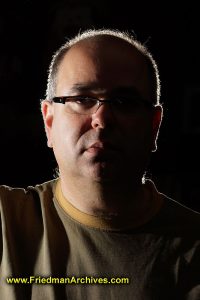
Before graduating to photography he was a rocket scientist for NASA’s Jet Propulsion Laboratory, where he patented the image authentication system now used in high-end digital cameras from Canon and Nikon, and published the book “Control the World with HP-IL”, showing how to interface Hewlett Packard handheld calculators to the outside world.
Gary’s best-known works are the 1988 “Peace Child in Latvia”, a photojournalistic documentary about a historic exchange between Soviet and American high-school student back in the days of the cold war, and his 2003 China Blog about his adventures teaching English in China.
In his spare time (Ha!) he is travelling the world offering highly-acclaimed beginning photography seminars to any city that wants it. He can be reached at [email protected]
This article was published in Advanced Images Issue 59
