
Among media in visual arts, photography is unique in many ways. Invented during the industrial revolution, it is a technical tool before it was “alleviated” into the realm of visual arts. Just like the printing tool which can be used to print advertisement as well as literary classics, photography, as a tool, can be applied to many different fields. How a picture should be judged depends heavily on how it is to be used. On the other hand, unlike painting and sculpture, which grew intuitively out of people’s desire to express themselves and flourishes in every corner of the world, photography is an invention of the Western world and, without a tradition of its own; it has been in search for its meaning. Initially and for many years, people often viewed it as an extension of painting. Its unique characteristics and its potential (as well as its limitation) have been recognized only gradually.
Throughout the years, many articles have been written on photography. In 1966, John Szarkowski, director of the photography department in Modern Arts Museum in New York at that time, wrote an article “Photographer’s Eye” in connection to an exhibition he curates for the Museum. In the article, he discussed the unique ways a photographer would view his subject matters. Although the selection of the pictures in the exhibition was based on the so-called “human interest”, I find what he was able to synthesize is equally applicable to landscape photography. In his article, he lists five characteristics a photographer would focus his/her eye on. They are “the thing itself”, “the details”, “time”, “the frame” and “the vantage point”. In my years involved with photography, I have found one additional characteristic particularly relevant to the pursuit of landscape photography. It is the effect of the lens perspective on a picture. I shall discuss these six of them individually in this article:
1.The thing itself
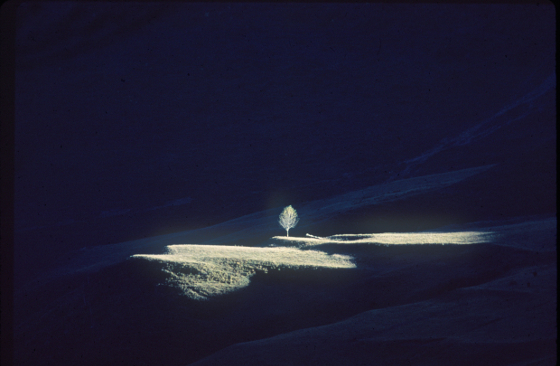
When we are out in the field, what prompts us to raise the camera is always the subject matter, which Szarkowski would call “the thing itself” in a picture. He points out: “The photographer must learn to accept that photography dealt with the actual He learned that the world itself is an artist of incomparable inventiveness, and that to recognize its best works and moments, to anticipate them, clarify them and make them permanent, requires intelligence both acute and supple”.
In his succinct statement, one particular fact especially worthwhile to emphasize, especially at the current age of digital technology, is that “The photographer must learn to accept that photography dealt with the actual.” There is no other aspect which defines photography in its uniqueness in the way as spelled out here. If we should attempt to deviate from it, photography is turning into a modern brush in the art of painting and photography is indeed becoming an extension of painting. Once we accept this limitation, “the photographer must learn to discover and to capture an unexpected moment” as Szarkowski puts it. If the photographer should miss that moment, there is no way a camera can recreate it later in its exact and original manner. Furthermore, precisely because the moment is unexpected, it is far more important for a photographer to deal with what is in front of him/her than to set his mind firmly on something that might not happen for a long time. That is the supple intelligence a photographer ought to possess. In landscape photography, it is more important to appreciate what nature is offering at that moment than to preconceive the image and to waiting for it to happen.

2. The detail
A common experience for many landscape photographers is to discover the picture taken, disappointingly, does not tell what he/she in mind when snapped the picture. One of the reasons for the discrepancy lies in the difference between the views outdoor where the viewer can selectively set his/her mind onto a certain set of subjects and the image captured by the camera in which everything is in sharp focus and competes for the viewer’s attention. In other words, the camera cannot distinguish what is important from what is insignificant. Every single detail is shown in a picture and the photographer cannot lift a part of the scene without destroy the integrity of the image. This difference led Szarkowski to point out, “once outside the studio, the photographer could only record what he found. Intuitively, he sought and found significant detail. His work, incapable of narrative, turned toward symbol”. In other words, a successive picture might not be a record. It is more a statement of some kind, even in landscape photography.
To turn toward symbol by bring out the significant detail is a technique often adopted by Chinese poets. In one of his poem, a poet of Tang Dynasty once wrote,
“清晨入古寺,初日照高林。竹径通幽处,禅房花木深。山光悦鸟性,潭影空人心。万籁此俱寂,但余钟磐音”。
(Early in the morning, I entered an ancient temple as the morning sun shines on top of tall trees;
A path shaded by bamboo trees leads to secluded quarters for monks among flowering woods.
Light on the distant hills delights birds and reflections on the pond pacifies minds.
All is quiet except the ring bells.)

With hardly a word to describe the structure of the temple, minor details of its surrounding bring out the mood of the place. Photography can do the same with the selective choice of details.
3. Time
The relevance of time in photography is widely understood. In Szarkowski’s word, “photographs stand in special relation to time, for they describe only the present….. Photographers found an inexhaustible subject in the isolation of a single segment of time”. In landscape photography, the significance of “time” can be said from two different perspective:
Because photographs “describe only the present”, what is captured in a photograph depends very much on the duration when the shutter is opened. Although most of the subject matters in landscape photography seem to stand still, we must pay special attention to the subtle movement of a few. A most outstanding case is the flowing water. Taking picture at different shutter speeds can significantly change the visual effect of the image.
The most crucial effect of “time” on landscape photography, however, is the change of light and/or weather. While many landscape photographers would “wait for the right moment” to come, I would prefer to see myself playing a more active role in this endeavor. By waiting “for the right moment”, it usually implies that we have a definite scene in mind and we are trying to find the “right” light and/or weather to match it. However, the change of light and/or weather is often unexpected and beyond our control. Rather wait for the right moment, I would prefer to look around and to find the right scenery under the given light and/or weather condition. Meaningful images can be captured if we broaden our choice of the subject matters. A landscape photographer in the field should develop the sensibility to find what is worthwhile to photograph instead of setting his/her mind firmly on what to take. As Szarkowski puts it, “Photographers found an inexhaustible subject in the isolation of a single segment of time”.
4. Vantage Point
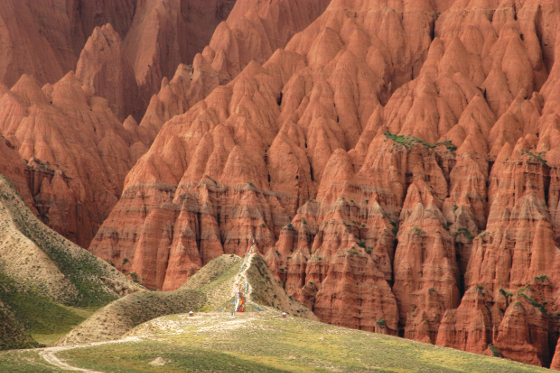
Because we often view the outdoor landscape while standing, it is customary to take picture in the same way. However, Szarkowski reminds us, “To see the subject clearly, the photographer had to abandon a normal vantage point”. By adopting different vantage points not only would broaden our vision. We shall find that the appearance of the world can be ordered and meaningful in different ways.
5. Lens perspective
When cameras were first made, the lens attached was often constructed that the perspective was similar to the human eye. As the optical techniques develop, lenses with different perspectives appear. They open for us new ways to see our surroundings. In the images captured, the relative sizes and positions of objects in view begin to change. They offer us a new way to interpret the relationship among objects.
6. Framing
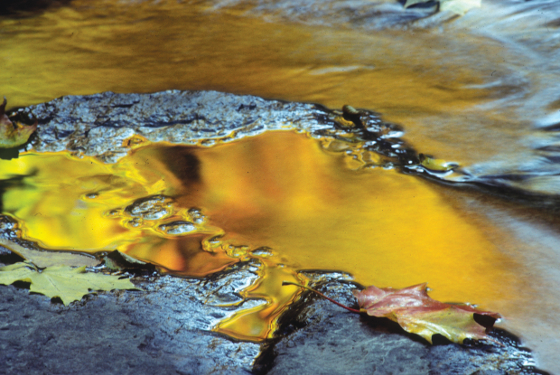
Although often overlooked, frame is the clearest distinction between an outdoor scene and a picture. Now matter how photographer tries to overcome it with cameras of wider format, it is one element no one can rid of. Therefore, it might be hard for some people to realize that frame is one of the essential elements for creativity. Among other uses, Szarkowski points out, “The photograph’s edge defines content. To quote out of context is the essence of the photographer’s craft”. In addition, “The frame isolates unexpected juxtapositions. By surrounding two facts, it creates a relationship”. Furthermore, the frame “creates the shapes that surround objects” and leads to issue of composition that is of particular importance in landscape photography. Unlike pictures of human interest, an image of landscape does not a “story” to tell. A visually attractive design becomes necessary to attract viewers’ attention.
To summarize the discussion, it is perhaps worthwhile to point out the importance of characteristics introduced here. Looking carefully, you will find that any picture can be analyzed in terms of these characteristics. Furthermore, they can be viewed as a sequential process when we take pictures. “The thing itself” is what attracts our attention in first place. However, to make the image meaningful, we have to be careful with “the details” which can only be put into emphasis by the use of “time”, “frame”, “vantage point”, and “lens perspective”. We can study these characteristics by analyzing how are they applied in any picture, thus learn to put them into practice when taking pictures.
This article was published in Advanced Images Issue 39.